


Cornea
Common Cornea Problems
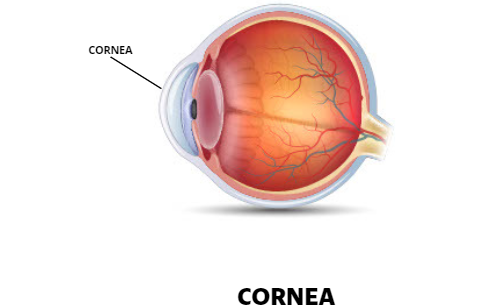
The cornea is your eye’s clear, protective outer layer serving as a barrier against things that can cause damage to your eye. The cornea plays a key role in vision. As light enters your eye, it gets bent (refracted) by the cornea’s curved shape. This helps how well your eye can focus on objects both far away and close-up. If your cornea is damaged by an injury, infection or disease, the resulting scars can affect your vision.
They may distort or block light as it enters your eye. Cornea problems are diagnosed by a thorough exam by an ophthalmologist.
Corneal Degenerations
Corneal conditions can lead to diminished vision and even complete vision loss. It is important to have your eyes evaluated on a yearly basis and seek treatment at the first signs of vision problems.
Keratoconus
This disease changes the shape and thins your cornea. The bottom portion of your cornea becomes cone-shaped. Typically it begins blurring vision during the teenage years and gets worse in early adulthood. Changes in the cornea’s shape can create mild to severe distortion, called astigmatism, and usually nearsightedness. The disease can also cause scars on your cornea resulting in vision loss. Your night vision could get bad enough that you can’t drive after dark.
Fuch’s Dystrophy
With surgery, we can reduce the symptoms and risks to your vision caused by corneal disease or trauma. Corneal surgery includes most refractive surgeries, as well as corneal transplant surgery. During a cornea transplant, an eye surgeon removes a portion of your cornea and replaces it with a new section of cornea from a donor.
We offer a range of medical and surgical treatments for various ocular surface conditions. Click below to learn more.
This condition is inherited and causes a breakdown of endothelial cells and the swelling of the cornea. An early sign of this condition is you awake with blurred vision that slowly clears during the day. As the condition worsens, swelling becomes more consistent and vision stays blurry. Signs of this condition may appear in your 30s or 40s, but it takes about 20 years for it to affect your vision. It’s more common in women than in men.
For patients who have Fuchs corneal dystrophy or swelling of the cornea after cataract surgery, corneal clouding is caused by dysfunction of the cells that make up the innermost layer of the cornea, called the corneal endothelium. The function of corneal endothelial cells is to pump fluid out of the cornea. When these cells are damaged, the cornea swells, resulting in corneal clouding and vision loss. Even though the other layers of the cornea are healthy, this condition has traditionally been treated with full-thickness corneal transplantation to bring a new layer of endothelial cells to the patient’s eye.







FAQs
What are common symptoms of cornea problems?
Your cornea usually heals itself after most infections or minor injuries. But during the healing process, you might notice symptoms like:
Blurred Vision
Tearing
Redness
Extreme Sensitivity to Light
Pain
If you are experiencing these symptoms for an extended period of time, you need to see a doctor immediately to test for a corneal abrasion.
How can you prevent corneal problems?
Follow strict sanitary hygiene guidelines if you are a contact lens wearer. Improper use of contacts is the primary reason for developing corneal diseases. Do not sleep with contact lenses in, even if they are FDA approved for overnight use. Take precautions to protect your eyes with safety goggles when participating in activities that could cause injury to your eyes.
You cannot prevent diseases that are genetically inherited from your parents. But if you are diligent with routine eyecare, and you find and treat it early, you can decrease your chances for vision loss.

© 2026 Eye Center South.
All rights Reserved.
Managed & Designed by

© 2026 Eye Center South.
All rights Reserved.
Managed & Designed by