


Sjogren’s Syndrome
Sjogren’s (SHOW-grins) Syndrome is a disorder of your immune system identified by its two most common symptoms — dry eyes and a dry mouth.
The condition often accompanies other immune system disorders, such as rheumatoid arthritis and lupus. In Sjogren’s syndrome, the mucous membranes and moisture-secreting glands of your eyes and mouth are usually affected first — resulting in decreased tears and saliva.
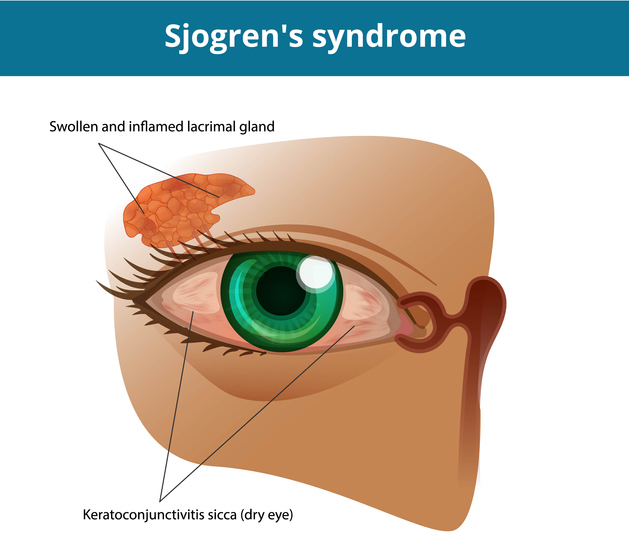
Sjogren’s syndrome or dry eye syndrome.
Keratoconjunctivitis sicca. Swollen lacrimal gland
FAQs
What are the symptoms of Sjogren’s?
The most common symptoms include dry eyes, dry mouth, fatigue and musculoskeletal pain.
Who is most likely to develop Sjogren’s?
Most Sjögren’s patients are women. The average age of diagnosis is late 40s, although it can occur in all age groups, including children, and in both sexes.
What causes the dryness in Sjogren’s?
In the autoimmune attack that causes Sjögren’s, disease-fighting white blood cells called lymphocytes target the glands that produce moisture – primarily the lacrimal (tear) and salivary (saliva) glands. Although no one knows exactly how damage occurs, damaged glands can no longer produce tears and saliva, and eye and mouth dryness result.

© 2026 Eye Center South.
All rights Reserved.
Managed & Designed by

© 2026 Eye Center South.
All rights Reserved.
Managed & Designed by