


Retinal Detachment
Retinal detachment is an eye problem that happens when your retina (a light-sensitive layer of tissue in the back of your eye) is pulled away from its normal position at the back of your eye.
There are many causes of retinal detachment, but the most common causes are aging or an eye injury. Since retinal detachment is often caused by aging, there’s often no way to prevent it.
But you can lower your risk of retinal detachment from an eye injury by wearing safety goggles or other protective eye gear when doing risky activities, like playing sports. If you experience any symptoms of retinal detachment, go to your eye doctor or the emergency room right away. Early treatment can help prevent permanent vision loss. It’s also important to get comprehensive dilated eye exams regularly. A dilated eye exam can help your eye doctor find a small retinal tear or detachment early, before it starts to affect your vision.
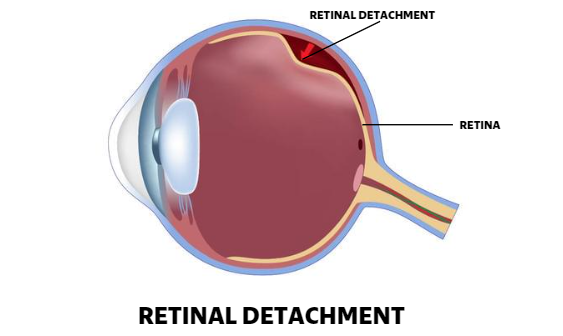
FAQs
What are the symptoms of retinal detachment?
You may not experience any symptoms If only a small part of your retina has detached.
But if more of your retina is detached, you may not be able to see as clearly as normal, and you may notice other sudden symptoms, including
Floaters (small dark spots or squiggly lines that float across your vision)
Flashes of light in one eye or both eyes
A dark shadow or “curtain” on the sides or in the middle of your field of vision
Retinal detachment is a medical emergency. If you think you may have a detached retina, it’s important to go to your eye doctor or the emergency quickly.
The symptoms of retinal detachment often happen fast. If the retinal detachment isn’t treated immediately, more of the retina can detach — which increases the chance of permanent vision loss and/or blindness.
Am I at risk of retinal detachment?
Anyone can experience a retinal detachment, but some people are at higher risk. You are at higher risk if:
You or a family member has had a retinal detachment before
You’ve had a serious eye injury
You’ve had eye surgery, (like cataracts surgery)
Some other problems with your eyes may also put you at higher risk, including:
Diabetic retinopathy (a condition in people with diabetes that affects blood vessels in the retina)
Extreme nearsightedness (myopia), especially a severe type called degenerative myopia
Posterior vitreous detachment (when the gel-like fluid in the center of the eye pulls away from the retina)
Certain other eye diseases, including retinoschisis (when the retina separates into 2 layers) or lattice degeneration (thinning of the retina)
If you’re concerned about your risk for retinal detachment, talk with your eye doctor.
What's the treatment for retinal detachment?
Depending on how much of your retina is detached and what type of retinal detachment you have, your eye doctor may recommend laser surgery, freezing treatment, or other types of surgery to fix any tears or breaks in your retina and reattach your retina to the back of your eye. Sometimes, your eye doctor will use more than one of these treatments at the same time. Treatment for retinal detachment works well, especially if the detachment is caught very early.

© 2026 Eye Center South.
All rights Reserved.
Managed & Designed by

© 2026 Eye Center South.
All rights Reserved.
Managed & Designed by