


Is Your Child Squinting or Tilting Their Head? Signs of Strabismus Parents Miss
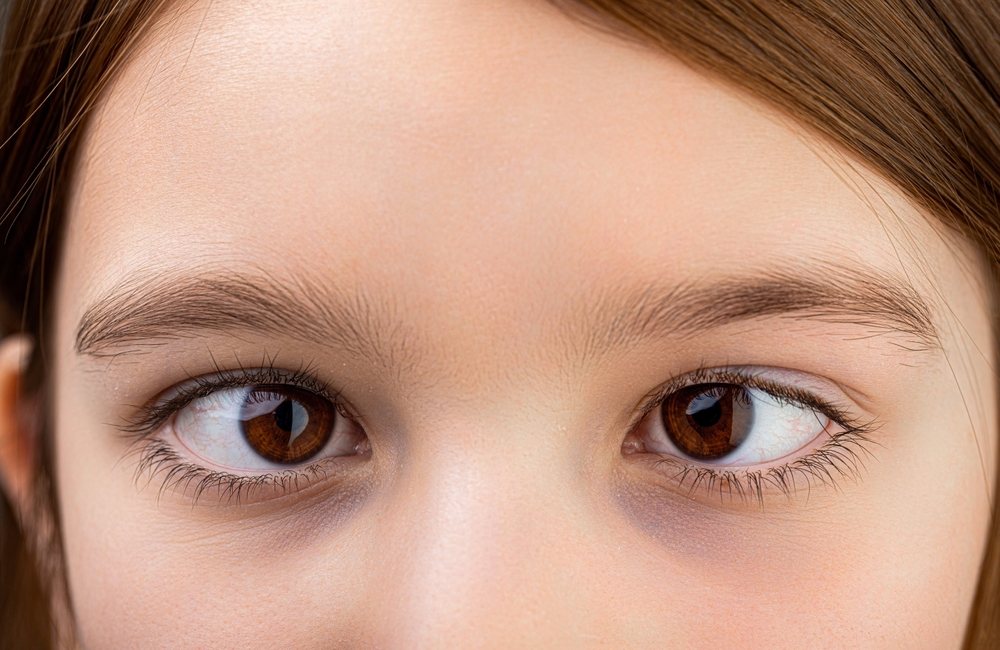
Strabismus is an eye condition in which the eyes do not align or work together properly. One eye may turn inward, outward, upward, or downward while the other remains focused. The misalignment may be constant, or it may appear only when a child is tired, concentrating, or looking in a particular direction. While crossed eyes are a recognizable sign of strabismus, the condition can also cause subtle behaviors that parents may not immediately connect to a vision problem.
Why Is My Child Squinting?
Squinting may help a child temporarily reduce blurry or double vision. A child might close or narrow one eye while reading, watching television, playing sports, or looking at something far away.
Occasional squinting does not always indicate strabismus. However, frequent squinting, especially when combined with other unusual visual behaviors, should be evaluated through a comprehensive pediatric eye exam.
Head Tilting May Be a Visual Compensation
Some children tilt or turn their heads because they see more clearly from a particular angle. This position may help the eyes work together or reduce double vision.
Parents may assume the behavior is a habit or posture issue. However, a consistent head tilt may be the child’s way of compensating for eye misalignment. Over time, this can also contribute to neck discomfort or an uneven head position.
Signs of Strabismus Parents May Overlook
Strabismus does not always cause an obvious eye turn. Watch for behaviors such as:
• Closing or covering one eye in bright light
• Tilting or turning the head to focus
• Frequently rubbing the eyes
• Bumping into objects or misjudging distances
• Difficulty catching a ball or participating in sports
• Losing their place while reading
• Complaining of headaches, tired eyes, or double vision
• Avoiding activities that require close visual attention
Young children may not realize their vision is different, so they might never complain about a problem.
Can Strabismus Affect Vision Development?
When the eyes send different images to the brain, the brain may begin relying more heavily on one eye. This can interfere with binocular vision and depth perception. In some cases, strabismus may also be associated with amblyopia, commonly called lazy eye.
Early identification is important because a child’s visual system continues developing during the early years. Prompt evaluation allows our eye doctors to determine whether treatment is necessary to support healthy vision development.
What Happens During a Strabismus Evaluation?
A pediatric eye evaluation may include checking visual acuity, eye alignment, focusing ability, eye movements, depth perception, and overall eye health. We may also use specialized tests to measure the direction and degree of the eye turn. Treatment depends on the type and severity of the misalignment. Your doctor will recommend care based on their specific visual needs.
Schedule a comprehensive eye exam with Eye Center South to evaluate your child’s vision, eye alignment, and overall eye health. Visit our offices in Dothan, Enterprise, Troy, or Wetumpka, Alabama, or Marianna and Panama City, Florida. Click https://www.visioncentersouth.net/our-locations.html to find a location near you. If your child is diagnosed with strabismus, and advanced ophthalmology care is recommended, we have an expedited referral pathway to world renowned strabismus specialist, Dr. Irene Ludwig. We are fortunate to have her on our medical staff rotating through the Dothan, AL and Panama City, FL offices on a monthly basis.


© 2026 Eye Center South.
All rights Reserved.
Managed & Designed by

© 2026 Eye Center South.
All rights Reserved.
Managed & Designed by